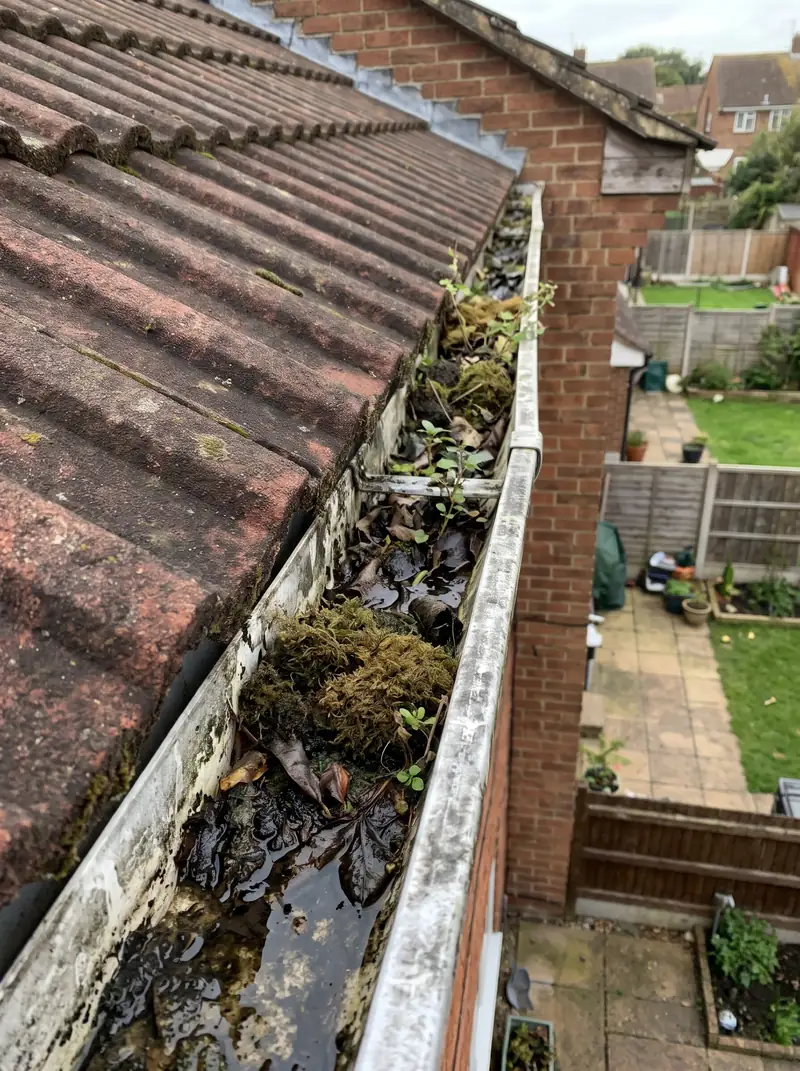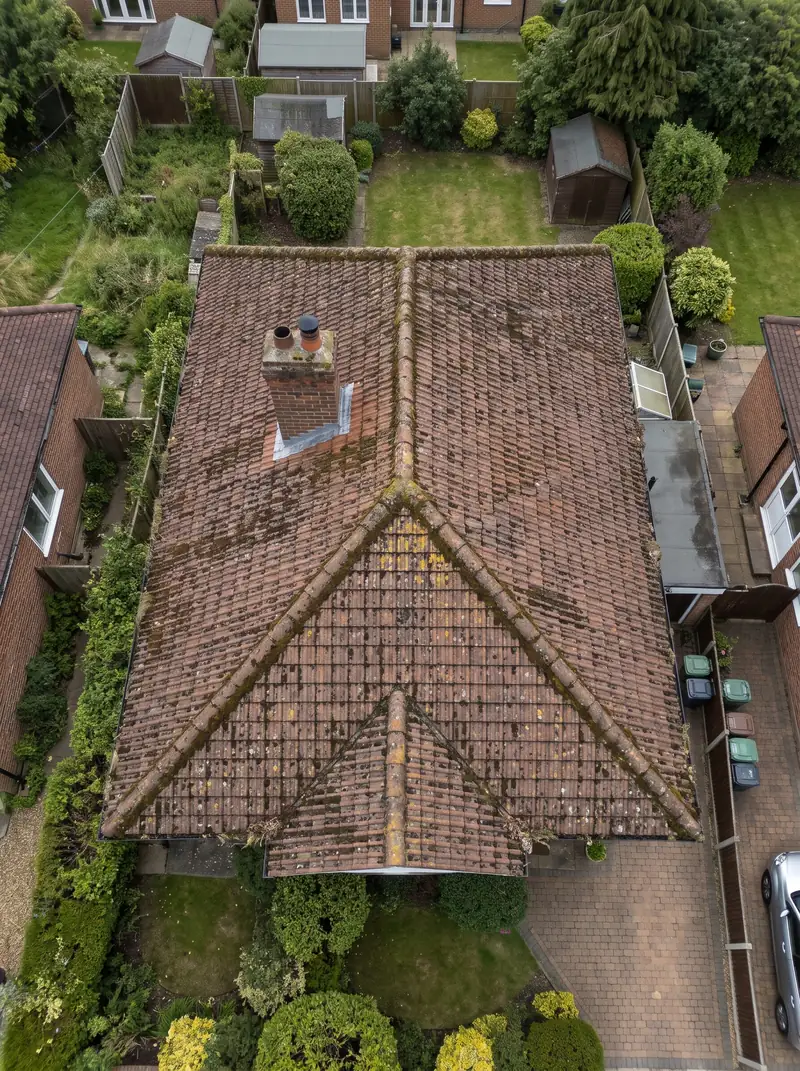

For most homes, at least once a year, ideally in late autumn after the leaves have fallen. Historic England’s maintenance advice is to clear gutters after heavy leaf fall, at least every autumn and preferably more often. Homes near trees or with mossy roofs may need clearing twice a year; open, newer homes may manage longer.
In this guide
- What do the experts recommend?
- What makes gutters fill faster?
- Which homes need clearing twice a year?
- Which homes can go longer?
- How do I work out the right interval for my home?
- Does regular clearing cost more overall?
- What about downpipes and gullies?
- Is once a year really enough?
- Should I clear the gutters on a garage or shed too?
- Quick questions
What do the experts recommend?
Historic England and the Society for the Protection of Ancient Buildings both put regular gutter clearing, especially after autumn leaf fall, at the top of their maintenance lists.
Historic England’s maintenance checklist for homes says to clear debris from gutters after heavy leaf fall, at least every autumn and preferably more often. The SPAB advises regular clearing of rainwater fittings, particularly after autumn leaf fall, because leaves, moss and debris block gutters, downpipes and gullies. Both are written mainly with older buildings in mind, but the principle applies to any house.
What makes gutters fill faster?
Trees nearby, a mossy roof, concrete tiles shedding grit, and roof valleys that funnel debris.
- Trees. The biggest factor. Even a tree a few gardens away can fill gutters in autumn.
- Moss. A mossy roof refills gutters all year. See moss in gutters.
- Roof material. Older concrete tiles can wear and shed fine grit into the gutter.
- Roof shape. Valleys and internal corners collect leaves.
- Birds. Nest material and droppings add to the debris.
Which homes need clearing twice a year?
Homes under or right next to trees, and homes with a lot of roof moss.
If your gutters are full again within a year of being cleared, twice a year is probably right: once in late autumn after the leaves have fallen, and once in late winter or early spring to catch what came down over winter, before birds start nesting. Homes surrounded by pines or with big deciduous trees overhanging the roof may need it more.
Which homes can go longer?
Newer homes in open positions, with no trees nearby and clean roofs, may only need clearing every year or two.
Even then, it is worth checking once a year. A camera look from the ground, or watching the gutters in heavy rain, will tell you whether they need doing. Don’t leave it so long that plants root in the silt, because that makes the next clear much harder.
How do I work out the right interval for my home?
Have the gutters cleared, then check them again after six months and a year. How full they are tells you how often to book.
This is the simplest method. If a cleaner uses a camera, ask them to show you the gutters each time and tell you how full they were. After a couple of visits you’ll know whether your house is a once-a-year, twice-a-year or every-other-year house. Note any gutter that fills faster than the rest; it is often under a particular tree or below a valley.
Does regular clearing cost more overall?
Not necessarily. Regular clears are quicker, and some cleaners charge less for them than for a heavily blocked first visit.
Gutters that are never allowed to silt up are faster to clear. You also avoid the cost of damage from overflowing water (see what blocked gutters can damage). Ask whether your cleaner has a regular-visit price.
What about downpipes and gullies?
Check them at the same time. Clear gutters can still overflow if the downpipe or the gully below is blocked.
After the autumn clear, look at the bottom of each downpipe and lift leaves off the gully grids. If you have water butts, check their filters. See blocked downpipes.
Is once a year really enough?
For many homes, yes, if it is timed well. A clear in late autumn catches most of the year’s leaves just before the wettest months.
Timing matters as much as frequency. A clear in September, before the trees have dropped their leaves, can leave you with full gutters by Christmas. Our guide to the best time of year to clean gutters goes through the calendar.
Should I clear the gutters on a garage or shed too?
Yes, if they drain to somewhere that matters. Garage and outbuilding gutters fill the same way and are often forgotten.
A blocked garage gutter can soak the wall it runs along, or dump water at the side of the house. Flat-roofed garages and extensions often drain to a short gutter that fills fast. Include them when you ask for a price, and when you check the gutters yourself. Porch canopies and bay window roofs often have small gutters of their own; they are easy to miss from the garden and quick to clear at the same visit. A conservatory gutter catches whatever overflows from the main gutter above it, so if the main gutter has been overflowing, check the conservatory gutter too.
Key points
- At least once a year for most homes, ideally in late autumn.
- Historic England says after heavy leaf fall, at least every autumn, preferably more often.
- Homes near trees or with mossy roofs often need twice a year.
- Open, newer homes may go longer, but check yearly.
- Check downpipes and gullies at the same time.
Quick questions
Is every two years OK?
For some open homes without trees, yes. Check once a year to make sure.
What happens if I never clean them?
Silt builds up, plants root in it, and the gutters overflow onto your walls. Over time that can mean damp and damage.
Do gutter guards mean I can clean less often?
Sometimes, for leaves. Guards still need checking and cleaning. See gutter guards.