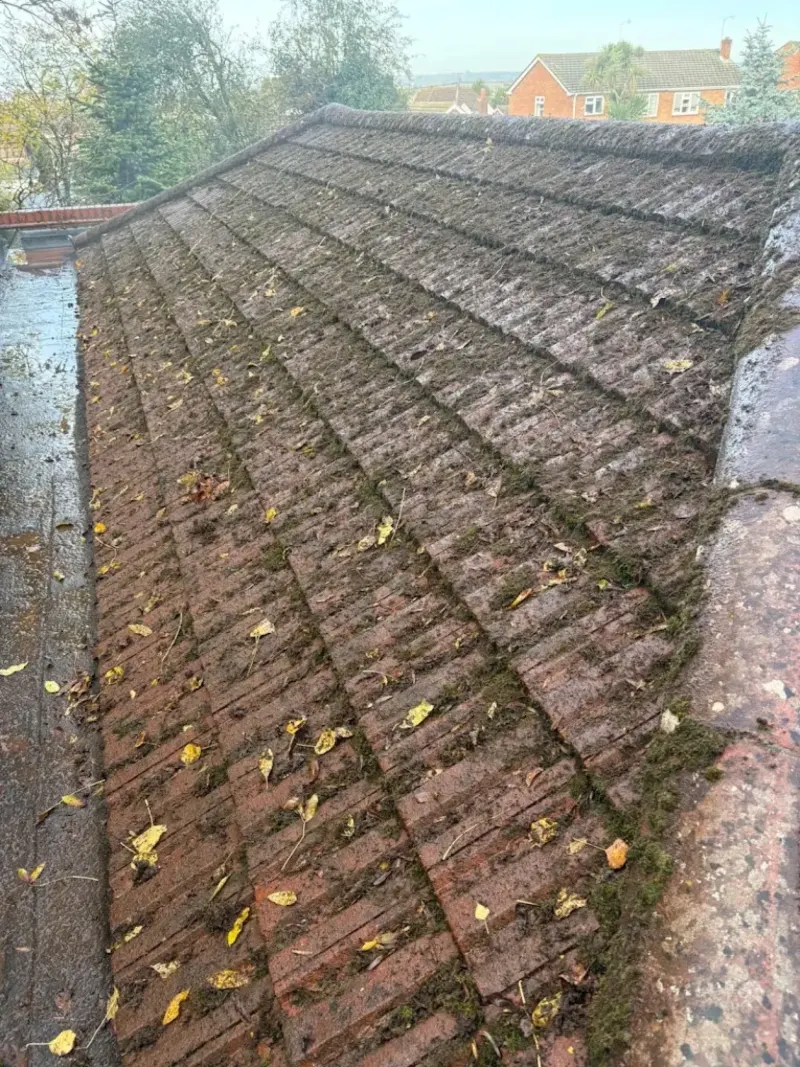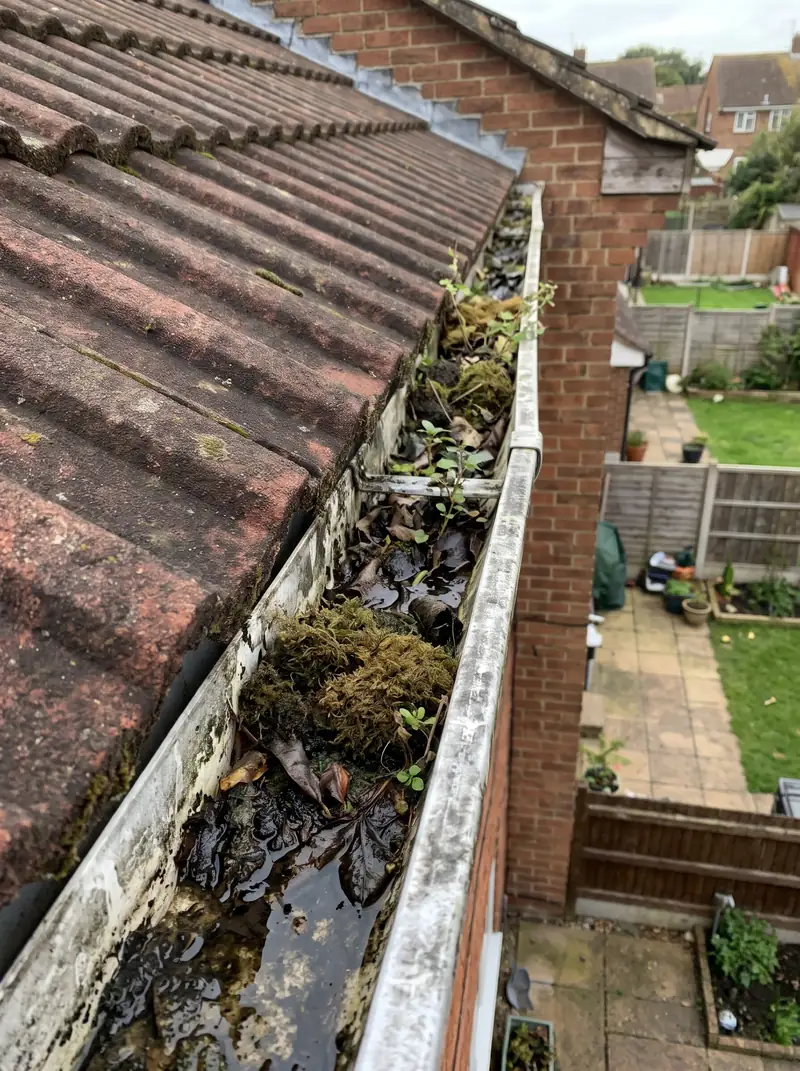

A blocked downpipe shows up as a gutter that overflows near the outlet while the pipe below stays quiet or only trickles. Blockages usually sit at the outlet, at the bends near the top, or at the bottom where the pipe meets the gully or drain. Clearing the gutter and outlet often fixes it; a blockage lower down needs flushing or rodding.
In this guide
How do I know the downpipe is blocked?
The gutter overflows at or near the outlet, but little or no water comes out of the bottom of the pipe in rain.
Other signs: water bubbling out of joints in the downpipe, a pipe that gurgles slowly long after the rain stops, damp patches or green streaks down the wall beside the pipe, or plants growing out of the top. If the downpipe is plastic, you can sometimes hear debris rattling or see a bulge at a joint. Tapping a cast iron pipe can sound duller where it is packed.
Where do downpipes usually block?
At the outlet, at the offset bends near the top, and at the bottom where the pipe meets the drain or gully.
Most downpipes leave the gutter, kink back towards the wall through two bends (the offset, or “swan neck”), run straight down, then end in a shoe over a gully or connect straight into an underground drain. Leaves and moss lodge first at the outlet and in the bends near the top. Grit and silt tend to settle at the bottom. A ball or a bird’s nest in the outlet can block a pipe in one go.
Can I clear it myself?
Sometimes. From the ground you can clear the bottom and flush the pipe. The top of the pipe needs access to the gutter.
Start at the bottom. If the pipe ends over a gully, clear leaves and silt from the gully grid and the shoe. Then, from the ground, feed a hose up from the bottom if there is a gap, or remove the lowest section if it is designed to come off, and flush it. A flexible drain rod or a plumber’s snake can break up a blockage you can reach.
For the top of the pipe you need to reach the outlet in the gutter. That brings in the same ladder questions as clearing the gutter itself; see is it safe to clean your own gutters. Don’t push debris down into the pipe from the top; lift it out.
What if water backs up at the bottom?
Then the blockage may be in the gully or underground drain, not the downpipe.
If the downpipe drains freely but water pools around the gully, or comes back up out of it, the problem is below ground. Clear the gully grid and as much as you can reach by hand. If it still backs up, the drain itself may be blocked. Who is responsible for that depends on where the blockage is and whether the drain is shared; your water company’s website explains how drains and sewers are split between homeowners and the water company in your area.
Can downpipes be damaged by blockages?
Yes. Water held in a blocked plastic pipe can push joints apart, and in a freeze it can split the pipe. Cast iron can crack.
Water expands when it freezes. A downpipe full of water in a cold snap can split, especially old cast iron and brittle plastic. Joints under pressure from standing water can also separate, so water runs down the wall rather than down the pipe. If a downpipe has leaked down the wall for a long time, you will often see staining or green growth on the bricks alongside it.
How do I stop downpipes blocking?
Keep the gutters above them clear, especially the outlets, and look at the bottoms of the pipes and gullies after autumn.
Most debris in downpipes comes from the gutter, so regular gutter clearing is the best prevention. Outlet guards or balloon guards, which fit over the top of the downpipe, stop large debris going down but need clearing themselves, because leaves build up on them. A quick look at the gullies each autumn, clearing the grids by hand, catches the silt end of the problem.
Do gutter cleaners clear downpipes?
Some do, some don’t, and some charge separately. Ask before you book.
A gutter vacuum clears the outlet at the top of the pipe. Rodding or jetting a blocked pipe is a different job with different kit. If you know a downpipe is blocked, say so when you ask for a price.
Key points
- Overflow near the outlet with a quiet downpipe means a blocked pipe.
- Blockages sit at the outlet, the bends near the top, or the bottom.
- Clear from the bottom first; lift debris out of the top, don’t push it down.
- Water backing up at the gully points to a drain problem.
- Clear gutters are the best way to keep downpipes clear.
Quick questions
Can I use a pressure washer to clear a downpipe?
We wouldn’t. It can force the blockage tighter or push water out of the joints and down the wall. A hose and a rod are gentler.
Should a downpipe go into a drain or onto the ground?
Usually into a drain or gully, or a soakaway or water butt. A downpipe that dumps water at the foot of a wall is worth getting looked at.
Can a water butt cause a blockage?
A diverter or butt can block if leaves get into it. Check the filter and overflow, especially after autumn.