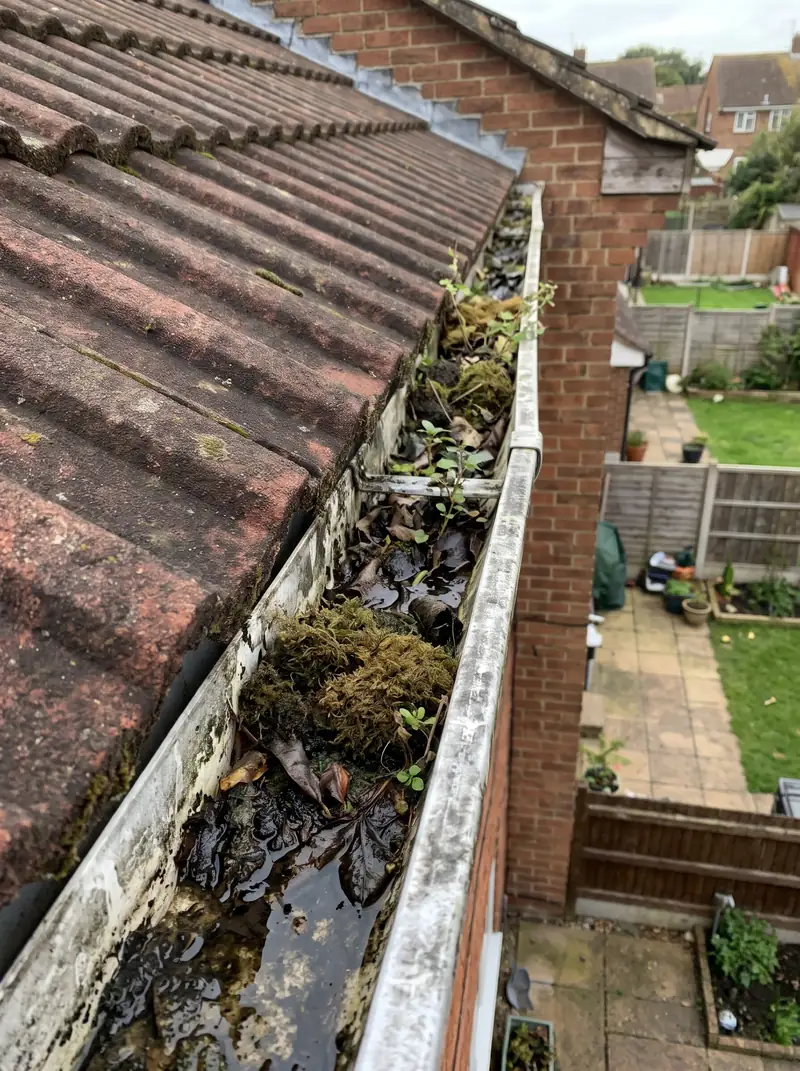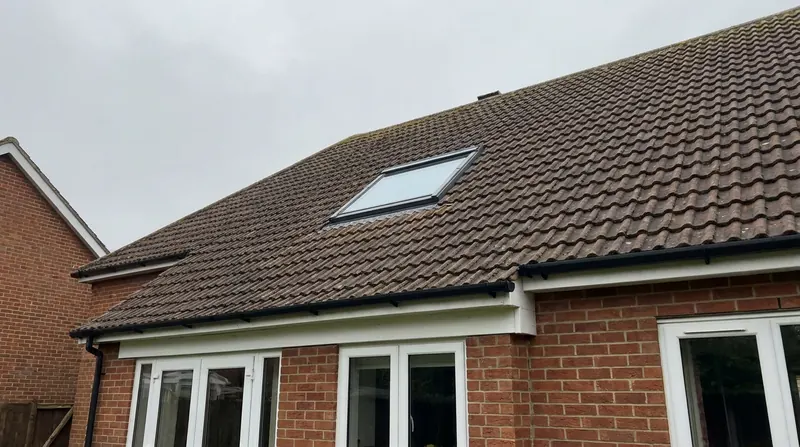
Water that overflows from a blocked gutter runs down the walls and lands at their base. Over months that can lead to damp walls, stained or crumbling brickwork and mortar, rotting timber fascias and window frames, and heavy, sagging gutters. A short blockage does little harm; a long-running one is what causes damage.
In this guide
How does a blocked gutter cause damp?
By keeping one patch of wall wet for long periods. Water running down the outside of a wall soaks into brick and mortar, and if it can’t dry out between showers, damp can show inside.
Walls are built to get wet in rain and then dry out. The problem with a blocked gutter is concentration: instead of rain spread over the whole wall, a stream of water from the roof runs down the same few bricks every time. That patch rarely gets a chance to dry. Historic England and the Society for the Protection of Ancient Buildings both point to blocked rainwater goods as a common cause of damp in older buildings, which is why both put clearing gutters near the top of their maintenance lists.
Inside, you might see a damp patch high on a wall or around a window reveal on the side of the house with the blocked gutter. Damp has many causes, so it is worth ruling the gutter in or out early, because it is the cheapest one to fix.
Can it damage brickwork and mortar?
Yes, over time. Masonry that stays wet is more likely to grow algae and moss, and in freezing weather water in the surface can cause it to flake or crumble.
The first thing you see is staining: green algae, black streaks, or white salts. That is mostly cosmetic. The longer-term risk is in winter. When saturated brick or mortar freezes, the surface can break away, a process called spalling. Soft mortar joints in older houses wash out faster when water runs over them constantly.
None of this happens in one wet week. It is a slow, repeated process, which is why a gutter that has overflowed every winter for years is a bigger worry than one that blocked last month.
What happens to fascias and soffits?
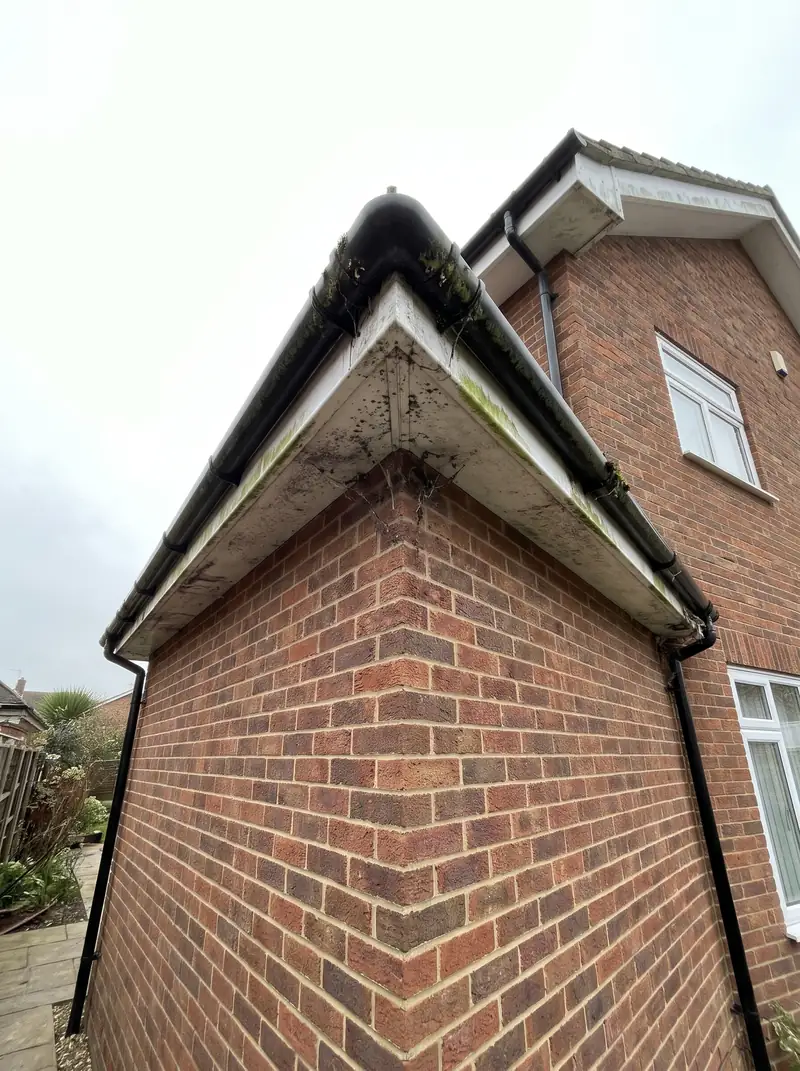
Timber fascia boards behind a gutter can rot if water keeps backing up against them. uPVC boards don’t rot but stain green and black.
A full gutter holds water against the board it is fixed to. On older homes with painted timber fascias, that is where rot starts, and rotten timber can loosen the gutter brackets. On uPVC fascias the damage is mostly appearance: green algae and black streaks along the line where water sits and spills.
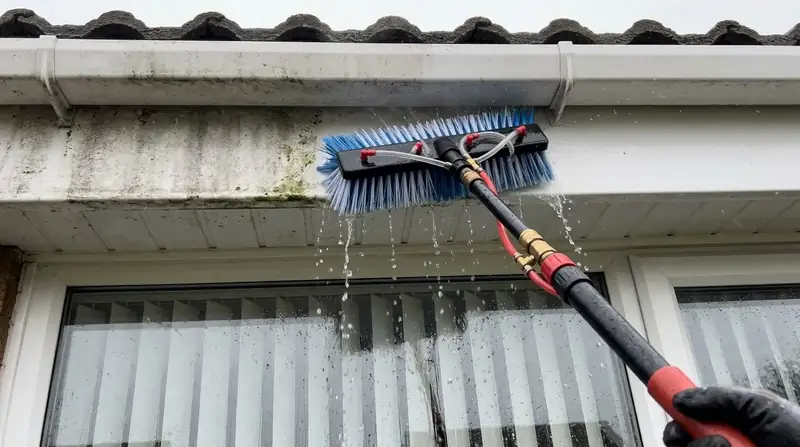
The soffit, the flat board under the eaves, can stain where water drips back along it. If you are having gutters cleared, ask whether the fascias can be washed at the same visit.
Can overflowing water damage foundations?
It can make the ground at the base of a wall wetter than it should be. Whether that matters depends on the house and the ground; it is rarely the first problem a blocked gutter causes.
You will see warnings online that blocked gutters “ruin foundations”. In practice, the visible effects come first: splashing at the base of the wall, soil washed away from a border, green paving, or a trench in the gravel. Water repeatedly dumped in one place against the house is not good for it, and on some soils and older houses it is a bigger concern. If you see cracks, get a surveyor, not a gutter cleaner.
The simple point: water from the roof should go into the downpipe and away into the drain, not onto the ground by the wall.
What about the gutters themselves?
Wet silt is heavy. A full gutter can sag, pull its brackets, open its joints and start dripping even after it has been cleared.
Plastic gutters are light and are held by clips every so often. When they are full of wet debris and standing water, the weight between brackets can bend them out of their proper slope. Once a gutter loses its slope towards the outlet, water sits in the low spots and it blocks again faster. Joints under strain can also start to leak; see leaking gutter joints.
Cast iron gutters are strong but rust from the inside when they hold wet debris, and their joints can fail.
Is water damage from a blocked gutter covered by insurance?
Often not. Many home insurance policies exclude damage caused gradually or by lack of maintenance, and some give blocked guttering as an example.
Insurers tend to separate sudden events, like a storm, from damage that built up over time. Ageas, for example, lists blockage or cracking of guttering causing damp walls among things its home policies don’t cover. Check your own policy wording; the details vary. We go through this in gutters and home insurance.
Key points
- Damage comes from repeated overflow over months, not a single storm.
- Damp walls, stained or crumbling masonry and rotting timber fascias are the usual results.
- A heavy, full gutter can sag and lose its slope, so it blocks faster afterwards.
- Insurance often won’t pay for damage put down to poor maintenance.
Quick questions
Can blocked gutters cause damp inside?
They can. Water running down the same patch of wall keeps it wet, and damp can show inside, often high up or around windows. Other causes are possible, so check the gutter first because it is the simplest fix.
How quickly does damage happen?
Slowly. Most of the harm comes from gutters that overflow for months or years. Clearing them once or twice a year usually keeps you well ahead of it.
Will cleaning fix the staining?
Clearing the gutter stops new staining. Existing algae and streaks on walls or fascias need cleaning separately, and some marks fade on their own once the wall dries out.