The Health and Safety Executive lists asbestos cement gutters and downpipes among the places asbestos can be found in homes built or refurbished before 2000. Asbestos cement in good condition is lower risk; breaking, drilling, scraping or cutting it is what releases fibres. If you think yours might be asbestos cement, don’t disturb it, and tell anyone working on it.
In this guide
- Which homes might have asbestos cement gutters?
- How can I recognise asbestos cement?
- Is it dangerous to have it on my house?
- Can gutters like this still be cleared?
- Who removes or replaces asbestos cement gutters?
- What should I tell a gutter cleaner or roofer?
- Is a broken piece on the ground a problem?
- Quick questions
Which homes might have asbestos cement gutters?
Any home built or refurbished before 2000 could have asbestos materials, and the HSE names gutters and downpipes as one of the outside places it is found.
The HSE’s diagrams of where asbestos can occur in buildings show asbestos cement gutters and downpipes on the outside of houses, along with soffits, roof sheets and flues. Its guidance for people responsible for buildings is to assume asbestos is present in a building built before 2000 unless there is evidence that it isn’t.
That does not mean every older house has them. Most UK homes have plastic gutters, and older homes often have cast iron. But some do, particularly on garages, outbuildings and older estates.
How can I recognise asbestos cement?
It is usually grey, hard and cement-like, often thick-walled and sometimes painted. You can’t confirm it by looking; only testing by a qualified person can.
Plastic gutters are light, smooth and usually white, black, brown or grey with a slight sheen. Cast iron is heavy, cold to the touch, and shows rust where paint has failed. Asbestos cement looks more like concrete: grey, fibrous at broken edges, and thicker. Painted asbestos cement can be hard to tell from painted cast iron at a distance.
If you’re not sure, treat it as if it might be asbestos and don’t disturb it. An asbestos surveyor can test it.
Is it dangerous to have it on my house?
Asbestos cement in good condition, left alone, is considered lower risk. The hazard comes from disturbing it.
Asbestos is harmful when fibres are released into the air and breathed in. Asbestos cement holds fibres in a hard cement matrix. Weathered, cracked or broken pieces, or work that cuts, drills, sands or breaks it, can release fibres. That is why the advice is consistently: leave it alone unless the work is done properly.
Can gutters like this still be cleared?
Debris can sometimes be removed carefully without disturbing the gutter itself, but scraping, wire brushing or pressure washing asbestos cement should be avoided.
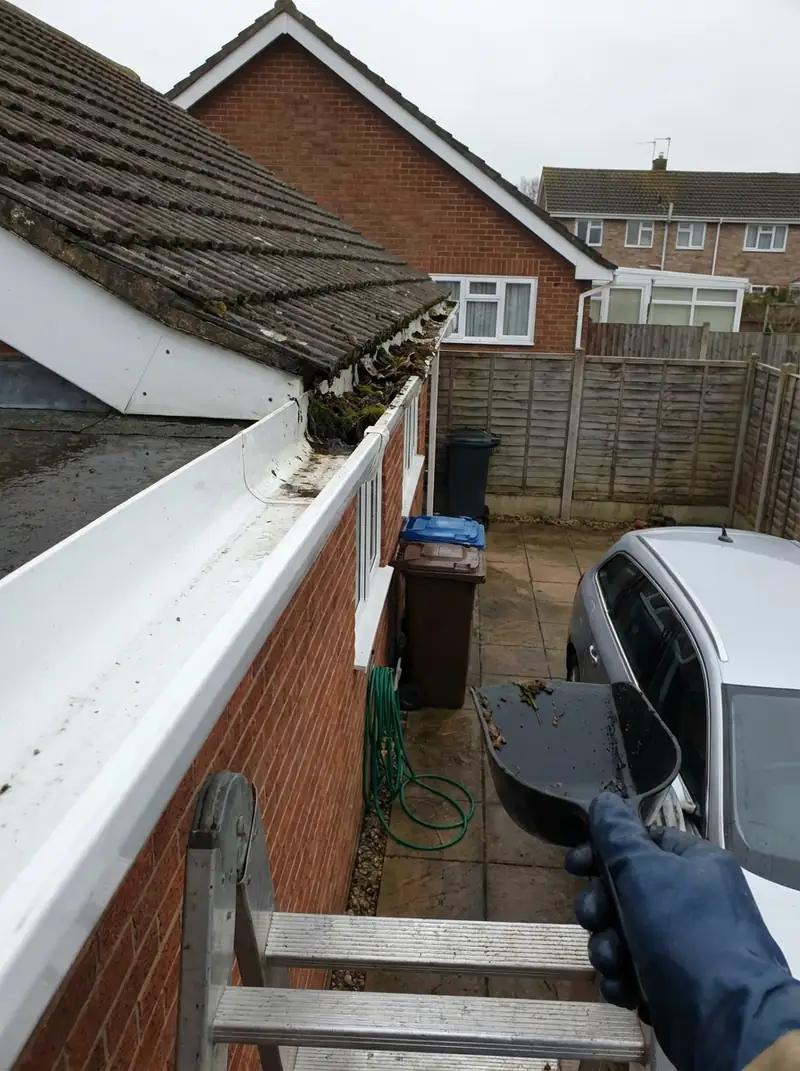
Leaves and moss sitting in an asbestos cement gutter aren’t asbestos. The risk is damaging the gutter surface while getting them out. Hard scraping, wire brushes and pressure washers can all abrade the surface. If your gutters might be asbestos cement, say so when you book anyone, so they can decide whether and how to do the job. Any reputable tradesperson will want to know.
Who removes or replaces asbestos cement gutters?
An asbestos specialist. Depending on the work and the material, some jobs need a contractor holding an HSE licence.
Replacing asbestos cement gutters with plastic is a common upgrade, but it isn’t a job for a gutter cleaner or for DIY. The HSE’s asbestos pages explain the rules for work with asbestos. Your local council can tell you how to dispose of asbestos waste in your area; it can’t go in the household bin.
What should I tell a gutter cleaner or roofer?
That your home was built or refurbished before 2000, which parts you think might be asbestos cement, and whether you have an asbestos survey.
A short message helps: “Our garage gutters look like grey cement and the house is from the 1960s. We don’t know if they are asbestos.” That lets the person decide whether the job can go ahead, how to do it without disturbing the material, and whether to recommend a survey first. If you already have an asbestos survey, from buying the house or earlier building work, share the relevant part.
If you are planning to replace the gutters, fascias or soffits at the same time, mention that too. Replacement involves removing the old material, which is a different kind of work from clearing debris out of it, and it may need a specialist.
Is a broken piece on the ground a problem?
Don’t break it up further or sweep it dry. Dampen it lightly, keep people and pets away, and get advice on safe disposal from your council or an asbestos specialist.
Broken asbestos cement is more likely to release fibres than intact material, which is why the general advice is to avoid making dust. Your local council’s website will explain how asbestos waste is collected or accepted in your area.
Key points
- Homes built or refurbished before 2000 can have asbestos materials, including gutters and downpipes.
- You can’t confirm asbestos by looking; it needs testing.
- Left alone in good condition it is lower risk; disturbing it is the hazard.
- Tell anyone working on your gutters if they might be asbestos cement.
- Removal is a specialist job.
Quick questions
Are cast iron gutters asbestos?
No. Cast iron is metal. It is heavy and rusts where the paint fails. From a distance, painted asbestos cement and painted cast iron can look alike.
Can I paint asbestos cement gutters?
Painting without sanding or scraping doesn’t usually disturb them, but preparation often does. Get advice before starting.
Is the debris in an asbestos cement gutter dangerous?
The leaves and moss themselves aren’t asbestos. The concern is damaging the gutter while removing them, so avoid scraping or wire brushing.